There are two main ways that bacteria can affect our teeth. One way is through the gums, causing gum disease. The other way is through tooth decay. There are lots of bacteria present in your mouth, and most of that bacteria lives peacefully and does not cause any trouble; however, there are some that can cause unwanted consequences such as bad breath, cavities and gum disease. Below, we will talk specifically about how bacteria causes tooth decay.
How are cavities formed?
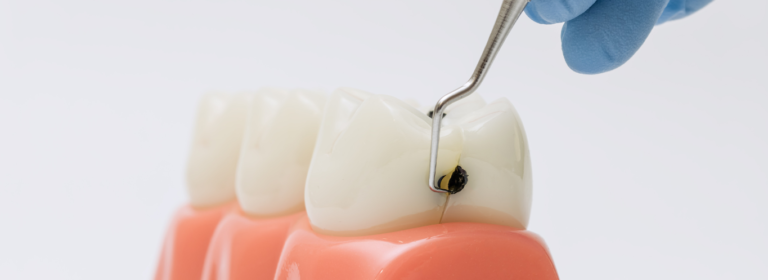
After you brush your teeth, it takes about 4 hours for bacteria to form on the surface of your teeth. After bacteria forms, it can consume any sugars that you eat, including sugary foods, sugary drinks, or starches such as chips, pretzels, or potatoes. Once these bacteria consume these sugars, it can form a soft sticky layer on the teeth that we call plaque. In addition to forming this plaque, bacteria release acid when they consume sugars. This acid can breakdown and weaken your tooth structure. Thankfully, our saliva is equipped with minerals and buffers which can counteract this acid, but if the bacteria are consistently fed with sugar, the acid can eventually cause a larger breakdown of the tooth. Over time, this can lead to a hole in the tooth called a cavity.
How are cavities found and are there symptoms?
Most cavities do not cause any pain, especially in their early stages. This is because the nerve which is associated with tooth pain is located in the very center of the tooth, so a cavity must be large to reach the nerve. This can be a good news and a bad news. It is good because nobody likes tooth pain, so cavities can often be addressed before they cause pain. The bad news is most of the time patients will not feel a cavity, so without regular dental checkups, cavities can often go undetected. When a cavity goes undetected for a long time, it can eventually reach the nerve, which is often when a cavity will need additional treatment. This is why it is important to visit your dentist every 6 months for cleanings and checkups. At your checkup, the dentist will use X-rays and a visual examination of your teeth to see if there are any cavities forming.
How are cavities prevented and how are they treated?
The most important way to address cavities is to prevent them from occurring in the first place. Tooth decay can even be reversed in some cases if the tooth breakdown is small. There are several factors that you can do to prevent cavities.
- Visit your dentist every 6 months for a cleaning and checkup – During the cleaning, all the plaque around your teeth will be removed and your dentist will be able to tell you if there are any areas to brush better or where a cavity might be starting to form.
- Brush your teeth at least twice a day for 2 minutes with fluoride toothpaste – Brushing can remove the plaque around our teeth and fluoride can strengthen and even reverse small areas of tooth decay.
- Limit the frequency and amount of your sugar intake – It is important to limit how frequently you are eating or drinking sugary foods/drinks, and starches. Limiting consumption to mealtimes can greatly reduce your cavity risk.
Even after these preventative measures are taken, sometimes there are cavities that need to be treated by your dentist. Typically, cavities can be treated by fillings; however, if the cavity is large or is causing pain, your tooth may need additional treatment such as a root canal or a dental crown. Your dentist will explain exactly what these treatment options are when you visit.
If you suspect you may have a cavity, feel free to call and schedule a cleaning and checkup! It is important to catch cavities before they cause any pain or symptoms.